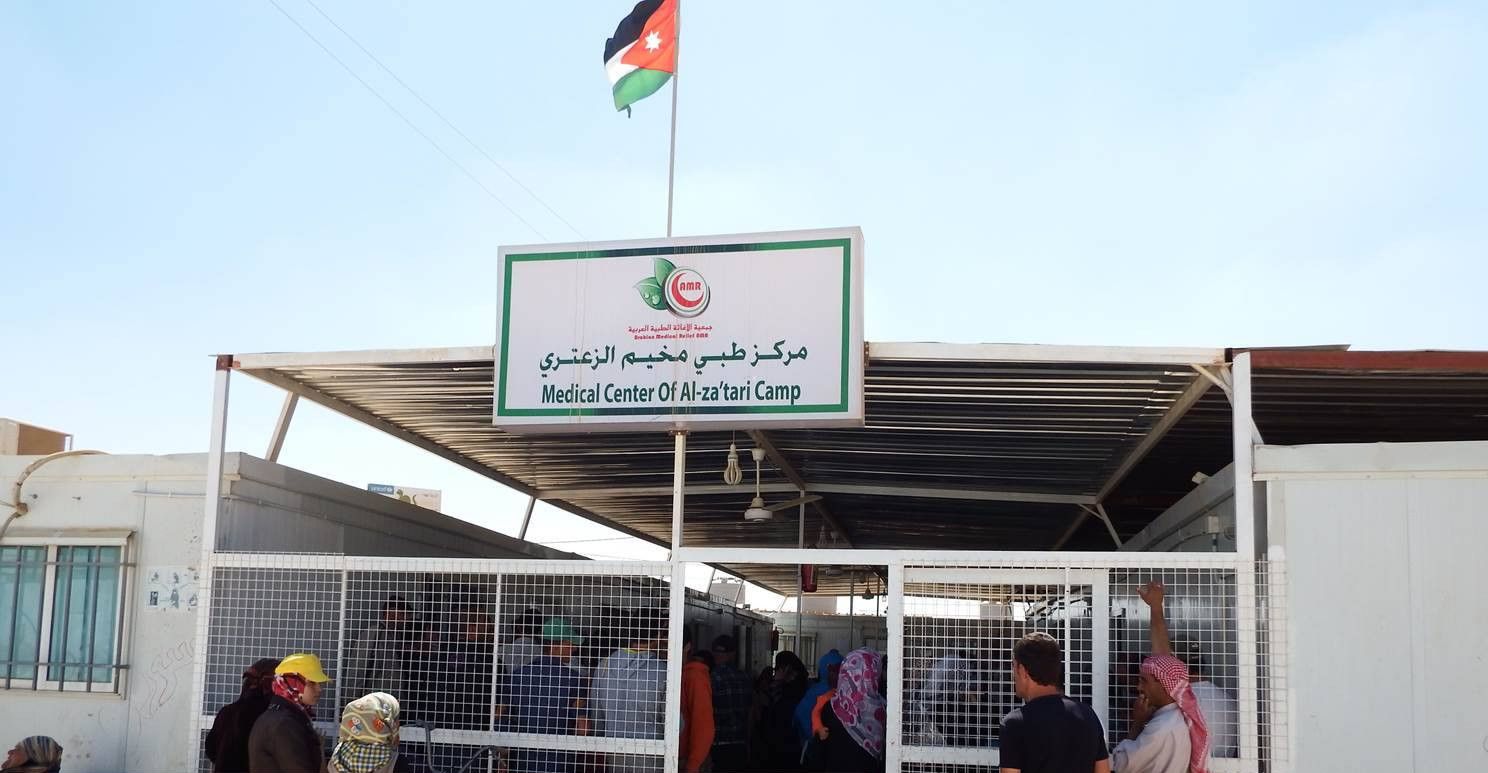
The clinic opened its doors 5 years ago, in 2012. The whole medical center consisted of a single "caravan" - half was the "exam room" with a sponge mattress and the doctor, and the other half was the "pharmacy" which dispensed medications for the patients. The original team was Dr. Khaled, Dr. AbdulLatif, and Dr. Hussein, 3 Syrian refugees. They were simply volunteering to meet the health needs of people in the camp, nothing more.
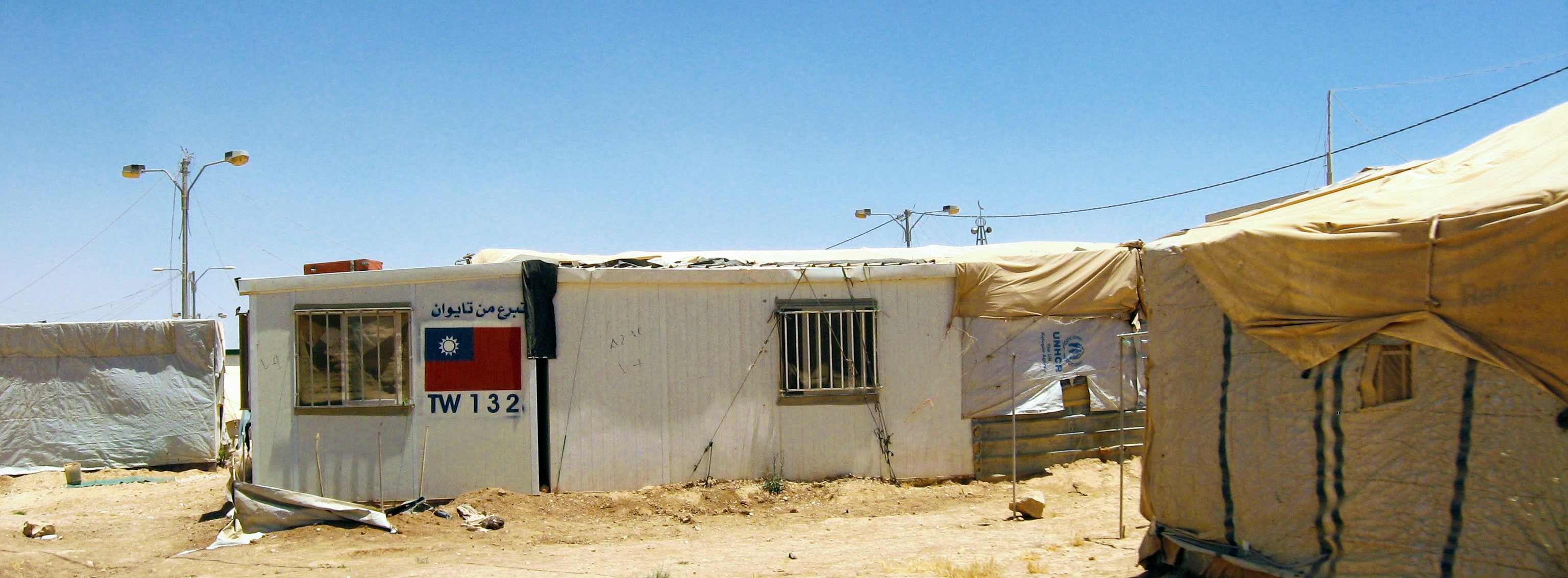
A few months later, a Syrian expatriate living in Kuwait visited the camp, and found the clinic buried among the caravans. He was so impressed by their dedication that he donated a huge amount of pharmaceuticals. Each month, they would send a report to him of how many patients they treated and which medications they used.
In time, the medical center started to be well-known, which meant trouble for the founders. The UN, UNICEF, and several children's rights organizations came and complained and reported the medical center for operating illegally.
One day, a security guard came and delivered an official order to close from the Interior Ministry. At the time, they had 300-400 patients, no longer a small operation. The soldier asked them, "when do you close?" They responded, "we close at 2pm" He told them "Alright, then lock it up and bring me the keys at 4pm." And, they did exactly what they were told. For their offense, they would have to pay 5000 JD (approximately $7,000 USD), and a repeat offense would result in a fine of 50,000 JD (~$70,400).
The very next day, they went back to the "medical center", broke the window, retrieved all the medications, set up in a caravan immediately next to it, and opened up for the 300-400 patients coming in today.
"When an old man is begging for medication, you have to take any risk and stand up to any challenge to serve"
Every time someone passes by and visits the clinic, they cannot help but donate money or medications after being impressed by the number of visitors they have and the work ethic found only in this clinic.
"If you can get these drugs anywhere in the camp with a prescription, we'll close down tomorrow"
The taunting from security didn't stop. A plainclothes security officer from the Ministry of Defense came in once, and looked around. He then went up to an older man and asked him if they were selling the medications to him.
"What? They diagnose me, treat me, and offer me medication, all for free!"
Later, the security officer came in his uniform and informed the clinic that security checked whether they sold the medications, and found out the clinic does not. "However, you still have to follow the law," and gave them another order to close.
They closed up, and opened back the very next day.
Up to this point, the physicians and staff had been working independently, with no registered organization. Just an informal group coming together for a noble cause. But without an organization backing them, they knew sooner or later they wouldn't be so lucky with security.
They started searching for partners, and in time found the Arabian Medical Relief, an organization that primarily acted as a Jordanian Medical Association. At the time, they did not have any projects to their name, really no funding, just a name and registration. They discussed as a group that it would be best if they merged the groups, and had the clinic be officially registered under the AMR, but that would take a long approval process.
Not long after, they received an order to close the medical center from the Ministry of Health. They were worried, and were this close to closing down. The very same day, the AMR clinic got approved. They immediately got it via email, printed it, and took it to the Ministry of Health. Since then, the center has been legal in the eyes of the law.
But the bureaucratic struggle was not over yet. To maintain status as a subsidiary of the Arabian Medical Relief, they had to hire Jordanian doctors to join the clinic. They were incredibly desperate, but were able to find physicians to join. Dr. Malik, a Jordanian pharmacist, was hired in order to properly authorize the pharmacy and validate its legality. Another Jordanian doctor volunteered to put his name on the medical center's paperwork - he didn't do any work nor receive pay from the center. A final Jordanian doctor joined - a general physician, recent graduate, but he demanded more pay than any of the Syrian specialist doctors that were already there and his superiors - and he got it out of their desperation.
In fact, all the incomes at the AMR medical center are lower than its counterparts, both in- and outside the camp. Hence begs the question: why does anyone work at the AMR clinic? After surveying all the staff, there are uniting forces: upholding the honesty, dedication, and real clinical work the AMR clinic represents.
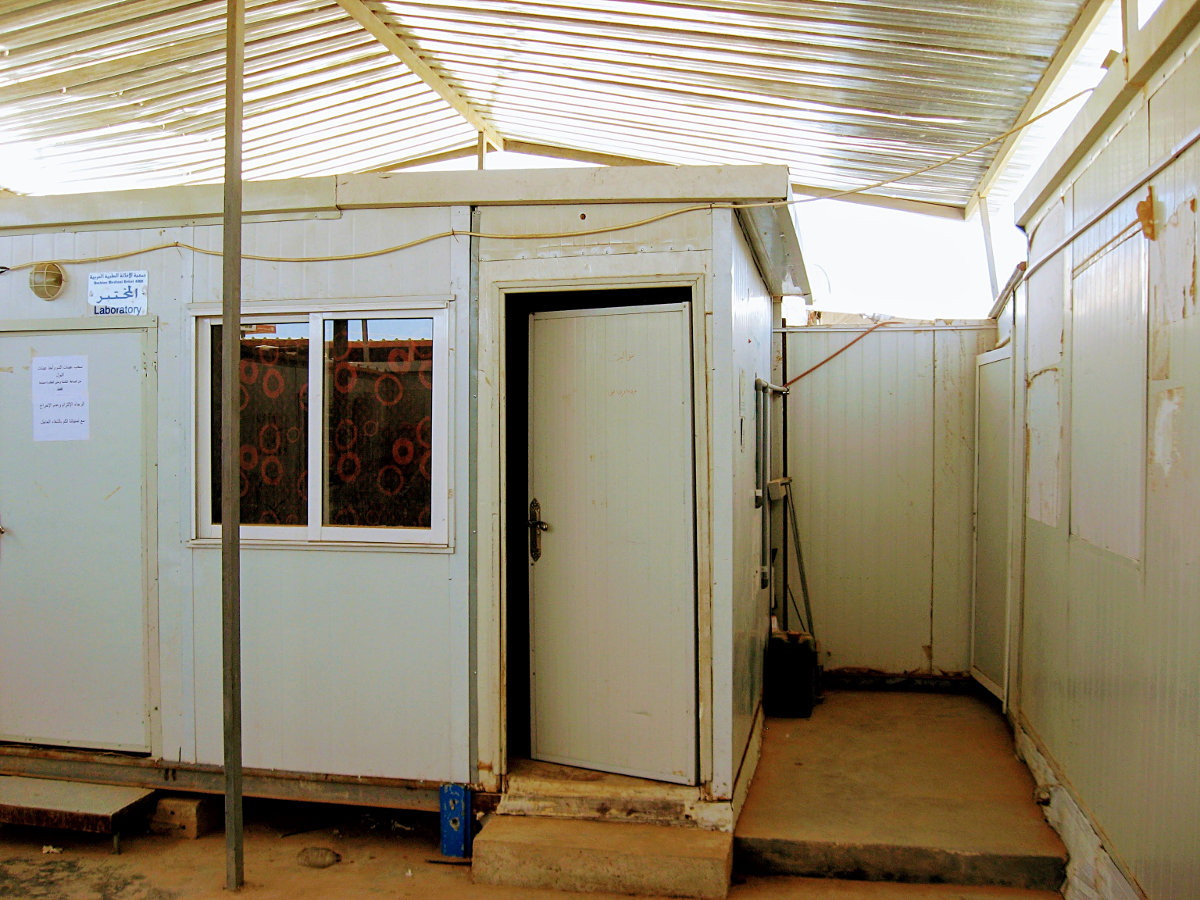
SAMS, the Syrian American Medical Society, funds the entirety of their budget. 15,000 JD goes to the pharmacy and 15,000 JD goes to salaries each month, each approximately $21,000. SAMS however is directed at supplying medical assistance to people within Syria, so the AMR clinic is not a priority for them, financially or organizationally.
At one point, SAMS was not able to afford to pay them, so the founders pulled together all the staff and told them, "Look. We're having some financial difficulties, and so we won't be able to give paychecks this month. We completely understand if you're unable to come into work." The next day, and the next, and the rest of the month, all of the employees kept coming in. That's not even mentioning all the times they had late pay, and we're not talking a few days.
Since they've established the center, the founders have always been around 2,000-5,000 JD in debt (approximately $3,000-$7,000).
Nowadays, the AMR medical center provides three services primarily. There's the day clinic, where I had been working for the last three weeks, and treats about 15,000 patients per month. In June when I visited, they treated over 13,000 patients. The next service is a mobile injury unit that travels around the camp to treat severe wounds or burns, especially for patients who cannot travel long distances to receive treatment. This unit treats between 100-200 patients per month. The last is CT/MRI/surgery referrals to other hospitals. They used to do surgeries in house, but surgery is "challenging here," a major understatement. Instead, now they partner with a hospital in Amman that has agreed to take their patients and do CT/MRI scans in exchange for the doctors working there for free as well. On my last day in Jordan, we gave them our goodbyes by taking them to Amman to work their shifts.
The passion and dedication found in the AMR clinic is out of this world - truly the heroes of our time. I feel incredibly fortunate to work alongside them and play a small part in their legendary efforts.