I was recently asked how technology can be used to help out refugees living in camps, and relived the experience of just how completely out of touch we are with refugee camps. This is a brief recollection of the medical technology used in the AMR clinic and how different universe refugees live in.
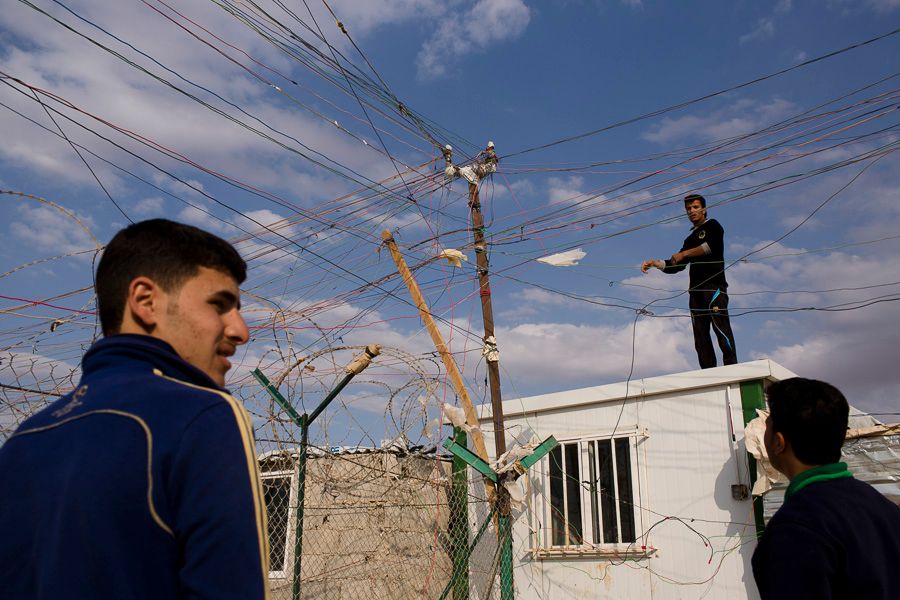
The Zaatari camp, despite its population of some 80,000 people, operates more like a hiking camp at the scale of a city. As mentioned in previous posts, there is running water, no sewage system, no organized road system, but of relevance to this post, no electricity, no phone towers, and no phone lines. This of course means that technology is basically nonexistent in the camp besides a few oases with gasoline or diesel powered generators, such as the clinic I worked at.
In the AMR clinic I worked at, the only electrical equipment used were:
- Blood pressure monitor
- EKG machine
- Otoscope
- Ophthalmology equipment (ophthalmoscope, slit lamp, phoropter, and autorefractor)
- Lab testing equipment
It is important for us to be mindful of the constraints refugees live in daily when aiming to help them. A huge part of modern medicine is highly dependent on our lifestyles, which are completely absent from the camp. By far, the most important amenities we take for granted are electricity for refrigeration and water sanitation. Each day in the clinic, at least half of the patients were directly or indirectly affected by these two factors, and many of the treatments prescribed by the doctors depend on them. Numerous medications are extremely susceptible to high temperatures that were common in the camp, and sanitary food and water was difficult to come by.
Luckily, things are changing in the camp for the better: now in 2017, the UNHCR and other authorities are placing much stronger emphasis on site planning and access to electricity. A recent update indicates that most households in the Zaatari camp will have electricity for about 8 hours per day during the evening, which is hopefully a sign of more to come.