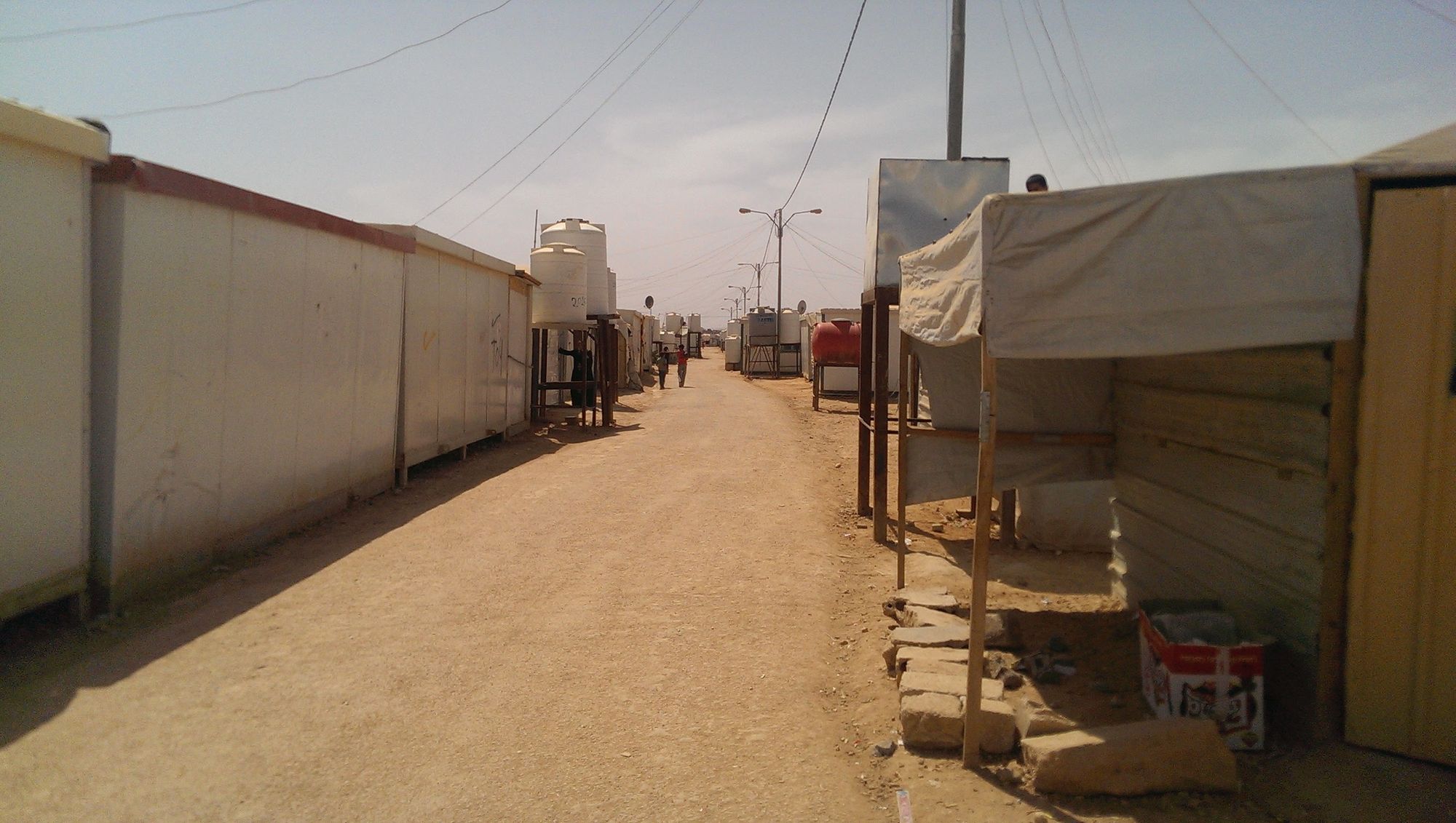
Today was my first day at the Zaatari refugee camp, and I'm speechless and breathless. Today, every possible line was blurred, all the way from the broken-down language barriers in the ER to the angry mob trying to get their prescriptions.
The Zaatari refugee camp is the 2nd largest refugee camp in the world, with estimates hovering around 80,000 people living there as of mid-2015[1]. I went with SAMS, the Syrian American Medical Society, on a mission to improve the quality of medical care at a clinic in the camp. We had a short orientation session at the beginning with Dr. Zohaili and Dr. Hariri, the leaders of the mission, where they explained some rules and regulations that I found curious[2].
- No pictures
- No offering money
- No wandering in the camp
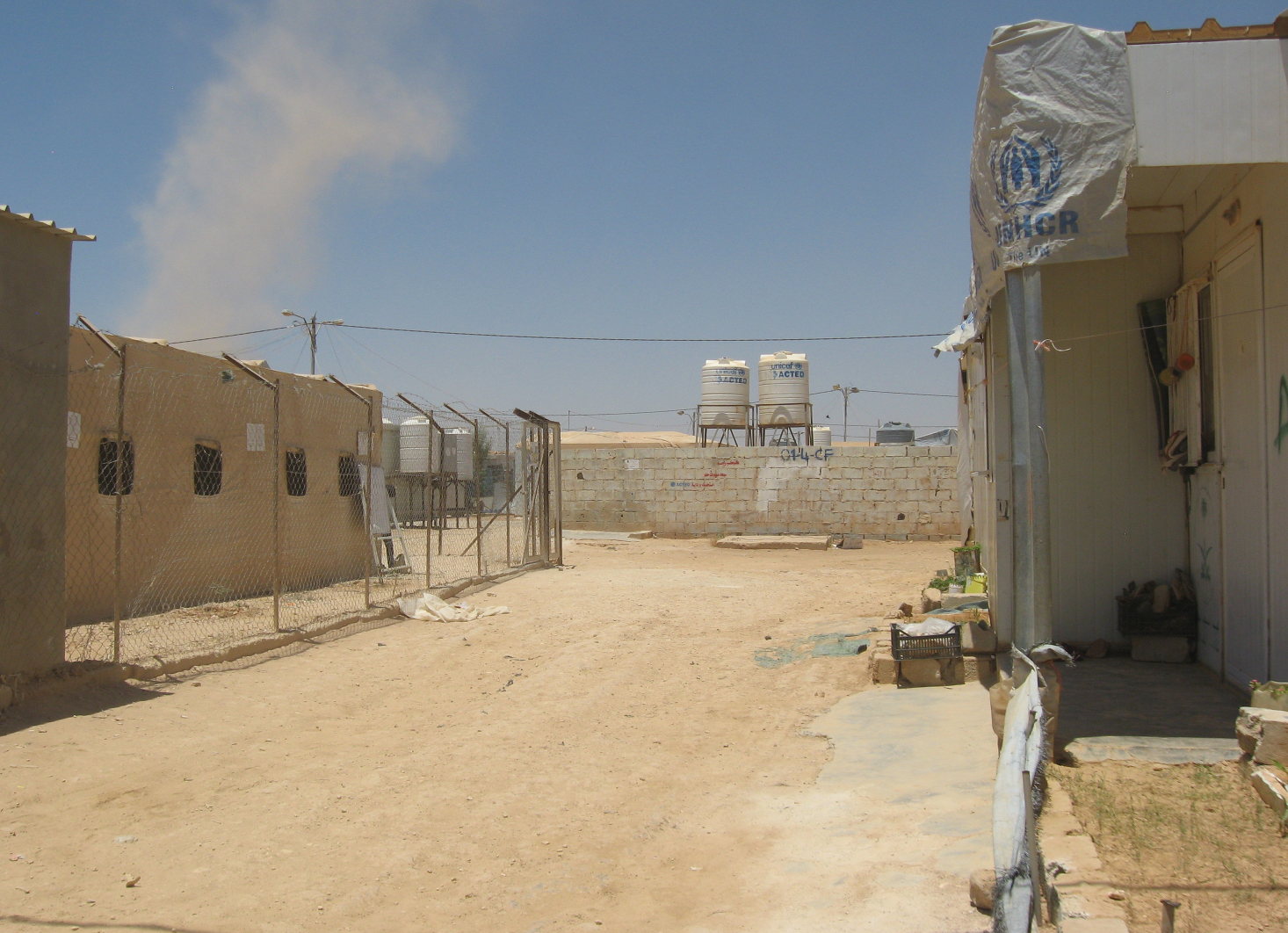
We left the hotel at the fine time of 9am and only arrived at the camp at nearly 11am, fashionably 2 hours late. We were let in with practically no inspection or even checking passports, and we were off to the races. As soon as we approached the camp, we were able to start making out what the camp actually is: thousands upon thousands of 2m x 2m x 2m cubes, lined up crudely into rows and streets. Many of them looked more like jail cells than they did living residences. Along the main road, there were many small shops, ranging from bike repair to wedding dresses - it almost felt like a city, but not quite.
After a turn into a narrow alley, we finally stop, but I look around and can't see the clinic - in fact, I don't even know what to look for anymore. I get out of the van, and follow the group to find the actual clinic, which I will describe in more vivid detail in a later post. Essentially, it's just a compound made up of several of the cubes with a sheet metal roof on top that doesn't properly fit.
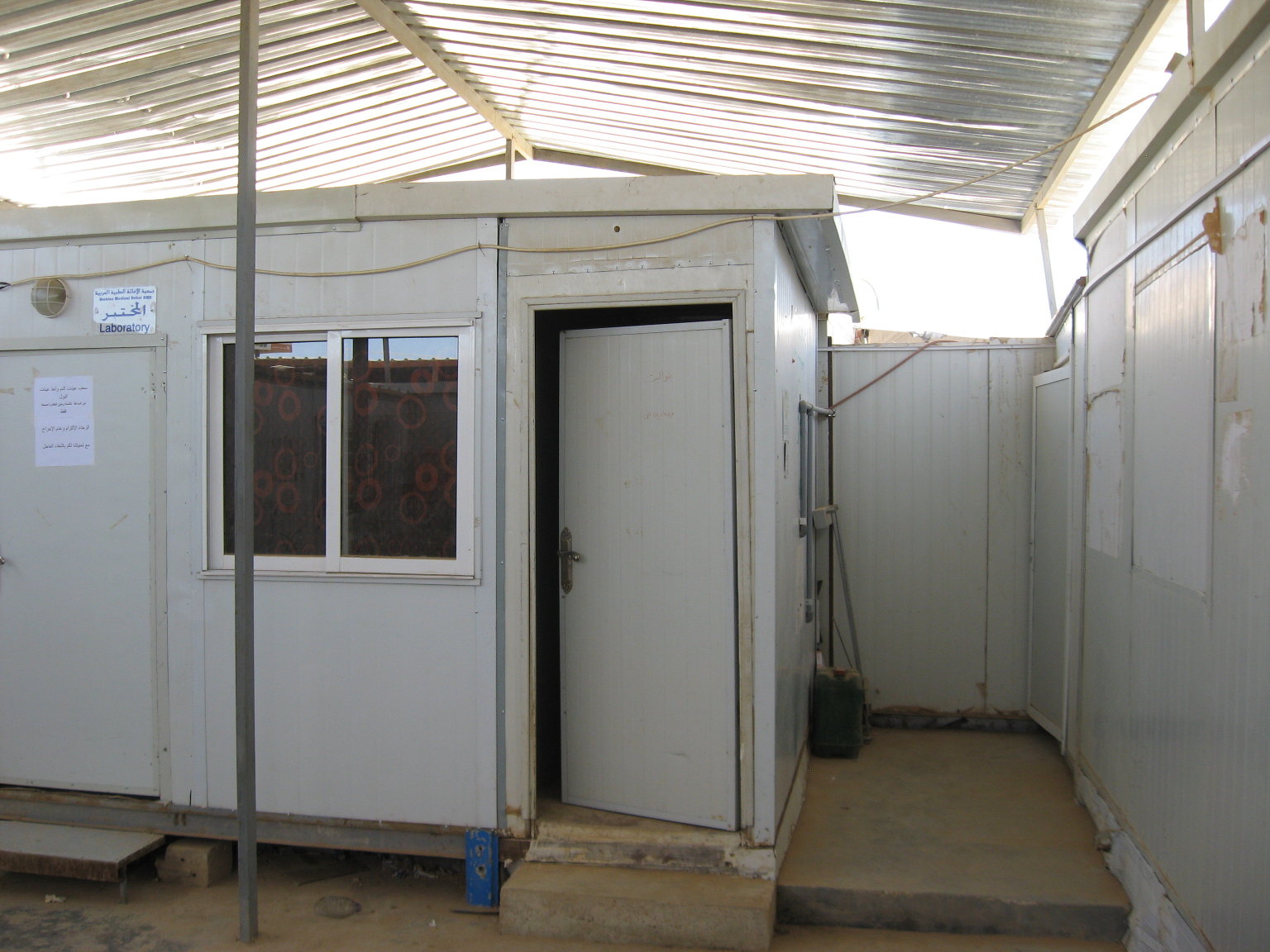
Women's Emergency Room
So, after getting a quick look around the "clinic", I'm ushered into the Women's ER along with a female nurse from our mission, and my job was to translate and interpret for her between Arabic and her native language, English. The emergency room is small, roughly 8 square meters. There's a cart with some essential equipment the nurse regularly uses, like gauze, antibacterial ointment, antiseptics, and things of that sort. In the corner, there are shelves with additional supplies for the cart along with gloves, shots, syringes, and an assortment of additional medical supplies the head nurse doesn't use because she's not sure what they are. Normally, the room is staffed by the head nurse and the nurse's assistant, both of whom are living in the camp. For more difficult procedures, the general physician comes in to help out, but that rarely happens. Luckily, both of them are here today to show us how work is done around here.
Well, what are the cases like? Well, there's everything. A good number of cases here are a result of severe neglect. Deep cuts with infections that go untreated for days. First degree burns that go untreated for weeks. Severe deterioration of flesh in the heel that goes untreated for months. This - is what the Zaatari ER is like. Of course, you have your routine blood pressure measurements and EKG scans, which are done with reasonably modern equipment, and many patients are just getting their sutures removed or wounds cleaned. But none of that takes away from the shock of a patient losing large amounts of flesh and skin or panic attacks in the clinic. At the same time, all the support staff, including myself, remain calm, collected, and continue with the procedures.
As you may expect, translating with this type of pressure is far more intense. Soon, the head nurse started to use simple English words for convenience like 'left' and 'right', and the American nurse started putting together simple Arabic sentences, so my role at the clinic blurred further into more of an assistant role than a translator role. There's really no time to be wasted. I found out later that the nurse from our mission has been living in Amman for 6 months now to learn Arabic, and the head nurse has been taking English lessons for about 2 weeks.
Pharmacy
After going through the ER for about 5 hours, traffic slowed to a halt and I was recruited to help with the pharmacy, which had just received a large load of pharmaceuticals by truck. I'm told by the nurses that this is the only clinic within the camp which dispenses medications, which is crazy to me. In any case, it was clear within 5 seconds of walking into the pharmacy that it had a horrible organization problem. In short: chaos. I first started by helping the American pharmacist reorganize the inhalers as it appears they had been misclassified. Meanwhile, the local pharmacist continued dispensing medications at the window to the angry mob waiting outside to get their prescriptions filled.
After 10 minutes of going through the different medications and consulting with the local pharmacist between prescriptions, I finally understood the system - or what was intended of it. First and foremost, there is absolutely no inventory done whatsoever. It's close to impossible to determine if a medication is available or unavailable besides scouring all the shelves. The first set of shelves is reserved for "commonly dispensed medications", which are already packaged into little bags for commonly prescribed amounts. Next, we have the "expiring in 2015" shelves, which are organized by expiration date rather than by type of medication - so you have the June 2015 shelf, the July 2015 shelf, etc. Last, we have the largest set of shelves, which are all other medications organized roughly by purpose - vitamins, antibiotics, allergy drugs, painkillers, etc. However, the pharmacist doesn't know what all the drugs do, so he just leaves them in the first open spot he finds.
While this organization scheme is already bad enough as it is, it's no help at all that there is no system to maintain order. Our first task was to painstakingly check every medication in the large set of shelves to dispose of expired drugs and move drugs which expire in 2015 into those set of shelves. We actually found a surprising number of already expired drugs, and dozens more which the pharmacist incorrectly recalled were out of stock and so weren't being dispensed. The categorization system really broke down for multipurpose drugs, where often they were classified in both categories depending on how the pharmacist felt that day of the week. Other members of the mission were packaging drugs into little bags, which seemed tedious enough until I had the pleasure of doing it myself. Oh, and did I forget to mention there's no inventory system? Finally, possibly the biggest problem is that the local pharmacist is actually quite comfortable with the current system and didn't look too happy that we were organizing it for him. Meanwhile, the American pharmacist was visibly confused and frustrated at the state of things, and by the look on her face it looked like she was going to completely redo it.
Outside the pharmacy, there are around 30 people struggling to get their prescriptions filled, even though all the physicians have left already. Everyone is clustered around the pharmacy window with prescription in hand, pushing their way to the pharmacist's hand so they can get their prescription before the pharmacy closes for the day. After all, the main reason most people are here is to get pharmaceuticals for their sick.
Reflections
On the way back, I couldn't help but reflect on how fortunate I am and how in need the people I was working with are. To think that I could spend a few days sleeping in the camp to see what it's like instead of the hotel now sounded, well, ridiculous. I can't do it, and I can't imagine how the 200,000 people who live in the camp do it on a daily basis.
http://data.unhcr.org/syrianrefugees/settlement.php?id=176®ion=77&country=107 ↩︎
I suspect there are security reasons for these rules, but I ended up breaking 2/3 of them by the end of my trip ↩︎